a brief history
Private Non-Medical Institutions (PNMIs) emerged in Maine in the 1980s as part of a federal effort to reduce reliance on large state institutions like the Pineland Center and Augusta Mental Health Institute (AMHI). As Maine moved to close or downsize these institutions and reduced nursing facility beds, PNMIs grew to fill the gap, initially serving frail elders who needed support beyond what was available in the community.
This shift accelerated following a class action lawsuit brought on behalf of AMHI residents, resulting in the 1990 AMHI Consent Decree, which lead to the closure of AMHI and required Maine to build out a comprehensive, community-based mental health system oriented toward the least restrictive setting possible.
Through the 1990s, PNMI services continued to expand and diversify. Specialty programs like Appendix E PNMI’s emerged to serve a wider range of populations and needs. As larger institutional structures have since disappeared, PNMIs have absorbed much of that weight. The regulations governing them, however, have not been meaningfully updated to reflect it.
wHY reform matters
The medical and mental health needs of clientele continues to grow, and programs are being asked to meet that complexity without the staffing, clinical infrastructure, training, or system coordination needed to do so safely. When resources fall short of need, clients are too often placed in settings ill-equipped to meet their needs, putting everyone involved at greater risk.
Clients deserve care equipped to meet the complexity of their needs, and staff deserve the support and stability necessary to provide it safely. These are not competing priorities; they are fundamentally connected.
While risk is inherent in this field, stronger systems can prevent escalation from becoming emergency. This means better placement decisions, better-supported staff, and providers equipped to respond when situations become unstable.
what we’re doing
We are advocating for the reform of Chapter II, Section 97 of the MaineCare Benefits Manual and the related regulatory statutes governing Appendix E Private Non-Medical Institutions. These programs are licensed residential treatment facilities that provide housing, integrated mental health treatment, rehabilitative services, and in many cases co-occurring substance use treatment to adults living with mental illness in community settings.
As mental health professionals and community members who know this system and its gaps firsthand, our focus is practical and specific. While our immediate work is centered on reforming the regulations that govern Appendix E PNMIs, we recognize that sustained change requires looking beyond a single regulatory chapter. Our broader goal is comprehensive reform of Maine's adult mental health care infrastructure as a whole.
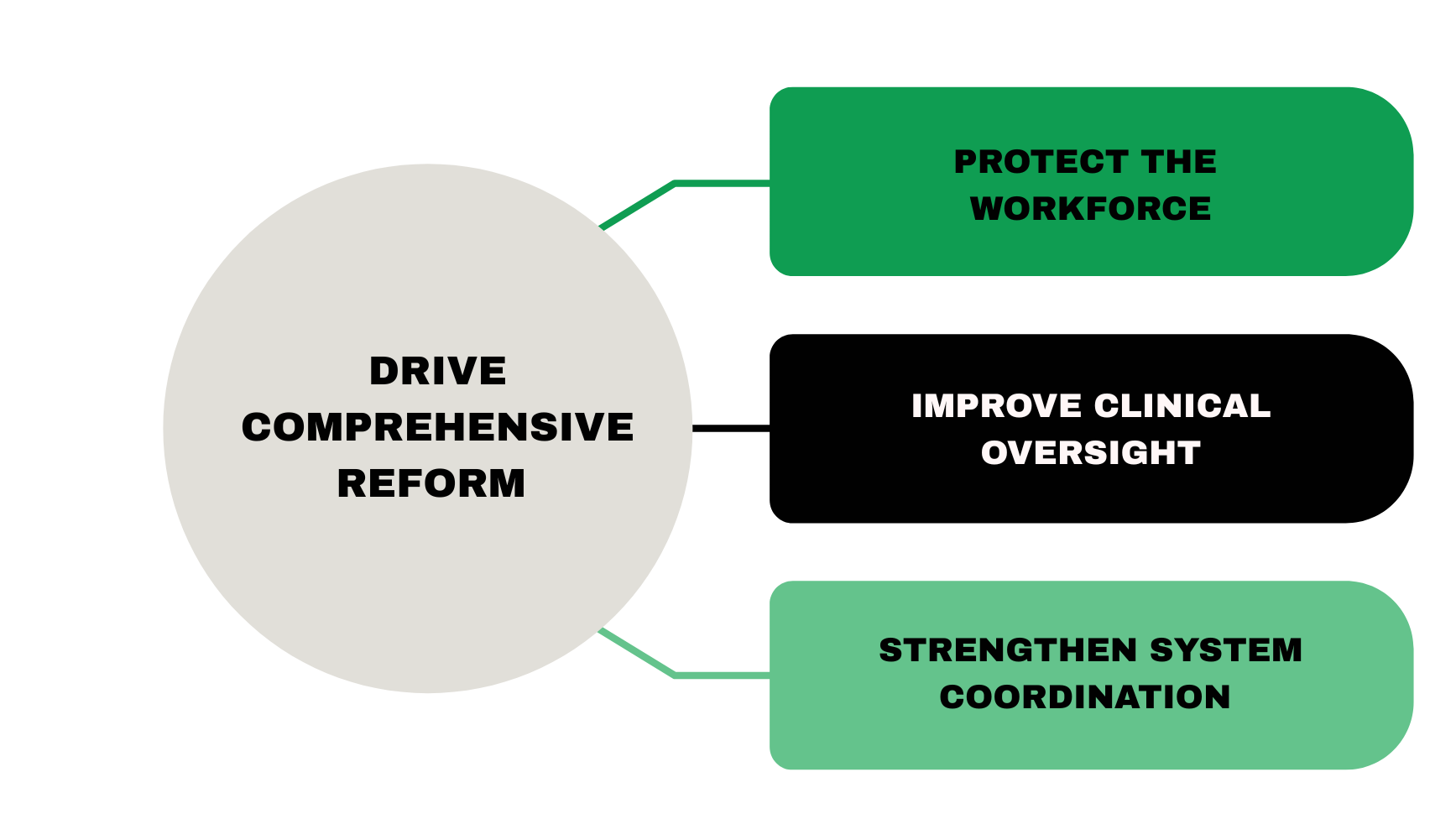
Our work is organized around three interconnected pillars, each designed to better support both the staff providing care and the clients receiving it. Together they drive toward that larger vision: a mental health system that is equipped, coordinated, and built to meet the complexity of the people it serves.